

Someone writes to me because their crystal bracelet broke and they are convinced something bad is coming. Someone else messages me at midnight because their cousin picked up their rose quartz and they are panicking about "losing their energy." A student in one of my sessions once asked me if her Citrine was "fake" simply because it looked slightly cloudy compared to her friend's piece.
These questions come from genuine love and respect for crystals. That is beautiful, and I never want to take that away from anyone. But somewhere along the way, a few popular beliefs turned into rigid rules, and rigid rules turned into fear. That is not what crystal work is meant to be.
So today, I want to clear some of the most common crystal myths for you, not to make your practice smaller, but to help you hold it with more understanding and a lot less anxiety. Not every popular crystal rule is a universal rule, and you deserve to know the difference.
Myth 1: "If Your Crystal Breaks, It Means Something Bad Is About to Happen"
This is probably the question I receive most frequently. A crystal cracks or snaps, and the mind immediately jumps to disaster.
I understand why. Crystals feel personal to us, almost like companions, so when one breaks it feels significant. But before you spiral into worry, consider the ordinary, physical reasons a crystal breaks:
- It was dropped or knocked against a hard surface
- It experienced sudden pressure, like being sat on or squeezed in a bag
- It went through a quick temperature change, such as hot water followed by cold air
- It already had a natural internal fracture or inclusion that finally gave way
- It was simply handled a little roughly over time
Natural crystals are not indestructible. Many of them already contain tiny internal stress lines from the moment they formed in the earth. A break is very often mechanical, not mystical.
What I want you to know is this: you are allowed to have a personal, spiritual interpretation of a break if it brings you comfort or reflection. That is valid. But it should never become a prediction of bad luck or danger.
If your crystal breaks, simply thank it, cleanse the pieces if you wish to keep them, and either repurpose the smaller pieces (in a pouch, a grid, or a plant pot) or let them go with gratitude.
Myth 2: "If Someone Touches Your Crystal, They Take Your Luck or Energy"

This belief creates a strange kind of guardedness. People stop letting friends admire their bracelets. Some even flinch when a child reaches for their crystal on the desk.
Here is what I tell my community: another person's touch does not automatically take away your abundance, protection, manifestation, or good fortune. Energy simply does not transfer that way through a casual touch.
If you personally feel more comfortable cleansing your crystal after someone else has handled it, you are welcome to do that.
Think of it as a small personal ritual, a way of resetting your own connection with the stone, rather than an emergency response to a "theft" of energy. There is a big difference between a calming habit and a fear-driven reaction, and I would always encourage the former.
CTA: If you are still building your own cleansing habits or want to explore gentle, everyday rituals, our cleansing tools and resources are there to support you at your own pace.
Myth 3: "A Perfect Crystal Is a Better or More Powerful Crystal"
This one comes up constantly when people are shopping for crystals, and I want to address it clearly because I see it cause unnecessary disappointment.
Natural crystals can have:
- Inclusions or internal lines
- Veins and tiny fractures
- Uneven or patchy colour
- Cloudy or opaque patches
- Rough or matte areas
- Slightly irregular shapes
- Variations in transparency from piece to piece
None of this means the crystal is fake, damaged, or inferior. It means the crystal is natural. Earth does not manufacture stones on an assembly line, so no two pieces will ever look identical.
At the same time, I do not want to swing to the other extreme and tell you that imperfections automatically make a crystal more powerful either. That is just as inaccurate. The truth sits in the middle: natural variation is simply normal, and it has no bearing on whether a crystal is authentic or capable of supporting your intention.
CTA: If you would like to see what genuinely natural, export-quality crystals look like across different pieces, our full crystal collection shows this variation honestly, piece by piece.
Myth 4: "If a Crystal Changes Colour, It Has Absorbed Negative Energy"
I understand why people reach for this explanation. A stone looking different after weeks or months feels meaningful, especially when it has been through a difficult period alongside you.
But there are very ordinary, practical reasons a crystal's color can shift:
- Prolonged sun exposure (some stones fade or darken)
- Heat
- Moisture or humidity
- Natural oxidation of certain minerals
- Chemical exposure, including perfumes, lotions, or cleaning products
- Treatments or coatings wearing off over time
- Simple ageing and environmental conditions
Color change does not automatically prove that a crystal has absorbed negativity. If you personally find spiritual meaning in the shift, you are free to sit with that reflection. But please do not let it become an immediate assumption that something bad has happened. Sometimes a stone that lived on a sunny windowsill has simply reacted to sunlight, nothing more dramatic than that.
I actually wrote a more detailed piece on this exact question, which you may find useful: Can Crystals Absorb Negative Energy?
Myth 5: "Every Crystal Can Be Cleansed With Salt Water"

This is one of the most practical corrections I make with new crystal users, so please read this section carefully.
Salt water is not a universal cleansing method. Some crystals are genuinely damaged by water, salt, or prolonged soaking. If you are not sure about a stone, it is safer to assume it should stay dry until you have checked.
Crystals that are commonly sensitive to water and salt include:
- Selenite (it can dissolve or flake with water exposure)
- Pyrite (it can rust or corrode)
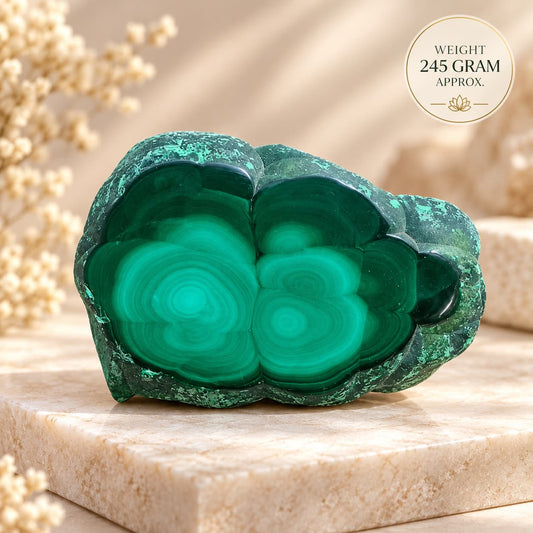
- Malachite (it is soft and can be damaged by moisture, and it can also react with certain substances)
- Angelite
- Calcite
- Lepidolite
Crystal care depends on the mineral, not on a one-size-fits-all rule you saw in a reel. Safer, more universal alternatives to salt water cleansing include:
- Sound (a singing bowl or bell)
- Moonlight, where the crystal is not light-sensitive
- Smoke, such as palo santo, sage, or camphor
- Dry cleansing methods, like resting the crystal on a selenite plate
- Simple, focused intention-setting with your hands over the stone
My rule of thumb, and one I repeat often: never use a cleansing method simply because it is popular. First understand the crystal in front of you.
CTA: Our selenite charging plates are one of the gentlest, safest ways to cleanse and recharge almost any crystal without water at all, and they are worth having in every collection.
Myth 6: "The More Expensive the Crystal, the More Powerful It Is"
Price tags can be confusing when you are new to crystals. Why does one bracelet cost far more than another that looks similar?
Price is genuinely influenced by real factors:
- Rarity of the mineral
- Size of the piece
- Colour saturation and clarity
- Overall quality grade
- Country of origin
- Availability in the market
- Craftsmanship, especially in jewellery settings
- General market demand
But price is not a universal measurement of spiritual power. A small, affordable tumble stone that you carry with sincere intention is not automatically less meaningful than a large, expensive display piece. I would rather see you working consciously with an accessible crystal than feeling like you need to overspend to be taken seriously by the universe.
Myth 7: "The Bigger the Crystal, the Stronger Its Energy"

This belief feels intuitive. Bigger looks more impressive, so surely it does more.
A larger specimen can absolutely be a beautiful centrepiece for your home or a wonderful focus object for meditation. But size alone should not be treated as a universal measure of spiritual effectiveness. A small crystal that you actually carry, hold, and remember to use with intention can be far more meaningful to you than a large piece sitting untouched on a shelf.
When someone asks me which size they should buy, I first want to know what they actually intend to do with the crystal. That answer matters far more than the dimensions.
Myth 8: "You Need a Separate Crystal for Every Single Problem in Your Life"
I see this tendency often. One crystal for money, one for love, one for sleep, one for confidence, one for protection, one for career, one for manifestation, one for emotional healing, and the list keeps growing until the collection feels overwhelming rather than supportive.
Here is what I want you to understand: you do not need dozens of crystals simply because every intention has been assigned a different stone somewhere online. A single crystal, such as clear quartz or rose quartz, can be incorporated into very different practices depending on the intention you bring to it in that moment. The stone does not change, your focus does.
Clarity of intention matters far more than the size of your collection. And to be clear, if you genuinely enjoy collecting crystals for the pleasure of it, that is a wonderful hobby in itself. This myth is only about the pressure to buy one for every single issue, not about discouraging collectors.
CTA: If you would rather build a smaller, intention-led collection, our crystals by intention page makes it easier to choose fewer stones with more clarity and purpose.
Myth 9: "If You Lose Your Crystal, It Means It Has Finished Its Work"

This is a genuinely popular spiritual interpretation, and some practitioners do believe a lost crystal has completed its purpose. I respect that view, but it is not a universal rule.
Sometimes the far simpler explanation is true. You misplaced it. It fell somewhere and rolled under furniture. It is inside a coat pocket or the bottom of your bag. It was left on a table somewhere and forgotten.
Before assigning any spiritual meaning, please look practically. Retrace your steps, check your bags, your car, your bathroom counter. If you genuinely cannot find it after a real search, you can then reflect thoughtfully:
- What intention did this crystal represent for you?
- What was happening in your life when you got it?
- Has something in that area of your life changed or resolved?
- Do you still need the same intention, or has it evolved?
I have written a full, detailed guide on this exact situation if you want to go deeper: What to Do When Your Crystal Gets Lost?
Myth 10: "You Only Have to Wear a Crystal, Think Positive, and Everything Will Work"
This is the myth I feel most strongly about, and I think it is the most important one to end on.
Crystals are not a substitute for action. Positive thinking alone does not mean you no longer need to communicate, learn, adapt, make decisions, take opportunities, set boundaries, or put in consistent effort. A crystal cannot do the living for you.
If someone wants career growth, wearing a crystal is not a replacement for improving their skills, applying for opportunities, networking, preparing properly for interviews, or taking initiative when a door opens.
If someone wants a healthy relationship, a crystal cannot replace honest communication, self-awareness, healthy boundaries, emotional responsibility, and mutual effort from both people involved.
What I always tell my students is this: intention, mindset, action, and consistency work together. A crystal can remind you, every time you glance at it or feel it on your wrist, of the energy and intention you want to cultivate. But you still have to walk toward the life you want. The crystal is a companion on that walk, not a shortcut around it.
Table 1: Myth vs Reality
|
Popular Belief |
What You Should Actually Remember |
|
Broken crystal = bad omen |
Breakage very often has ordinary physical causes |
|
Someone touched it = lost your energy |
Touch does not mean you have lost your luck |
|
Perfect crystal = better crystal |
Natural crystals naturally vary in appearance |
|
Colour changed = absorbed negativity |
Sun, heat, moisture, and ageing can all cause colour shifts |
|
Bigger or costlier = more powerful |
Size and price do not determine spiritual value |
|
Lost crystal = its work is done |
Look practically first, then reflect if truly not found |
|
No action needed if you wear it |
A crystal supports intention, it does not replace effort |
Table 2: Crystal Care Myths
|
Care Belief |
The More Accurate Approach |
|
All crystals can be soaked in salt water |
Only water-safe stones should be soaked; selenite, pyrite, malachite, angelite, calcite, and lepidolite should stay dry |
|
Sunlight is always fine for cleansing |
Some crystals (like amethyst or citrine) can fade with prolonged direct sun; check before leaving stones on a sunny windowsill |
|
Wiping with any cloth is enough |
A soft, dry cloth is safest for most stones; avoid harsh scrubbing on softer minerals |
|
Cleansing must always involve water |
Sound, smoke (palo santo, sage, or camphor), moonlight, and selenite plates work for almost every crystal, water-safe or not |
|
Cleansing has to happen on a strict schedule |
Cleanse when it feels needed, such as after heavy use or a difficult period, not out of fear of missing a date |
Crystal work should bring you awareness, intention, and reflection, not fear. You do not need to be afraid if your crystal breaks, if someone touches it, if it changes colour, if it carries natural imperfections, if you lose it, if you miss a cleansing ritual, or if you do not own dozens of stones. And most importantly, wearing a crystal is not the end of the process. Your actions, choices, consistency, and awareness matter just as much.
If you would like to go deeper into understanding your crystals, choosing the right ones for your intentions, and building a genuine, informed practice, our website is built for exactly that. You can read detailed crystal guides, explore stones by intention or by chakra, and find naturally sourced, high-vibrational crystals to support your journey at shop.drneetikaushik.com.
FAQs
Q1. Is it bad if my crystal breaks?
Ans. Not necessarily. Breakage is often caused by ordinary factors like drops, pressure, temperature change, or a natural internal fracture. It does not automatically predict bad luck.
Q2. Does someone touching my crystal affect its energy?
Ans. No. A casual touch from another person does not take away your luck or energy. You can cleanse the crystal afterward if it brings you comfort, but it is not an emergency.
Q3. Do natural crystals have cracks and imperfections?
Ans. Yes. Inclusions, uneven colour, cloudiness, and slight irregularities are all normal in natural crystals and do not mean a stone is fake or lower quality.
Q4. Why does my crystal change colour?
Ans. Sun exposure, heat, moisture, oxidation, and general ageing can all cause natural colour changes. It does not automatically mean the crystal has absorbed negativity.
Q5. Can all crystals be cleansed with salt water?
Ans. No. Stones like selenite, pyrite, malachite, angelite, calcite, and lepidolite can be damaged by water or salt. Sound, smoke, moonlight, and selenite plates are safer, more universal options.
Q6. Does a bigger crystal have more energy?
Ans. Not necessarily. Size can make a piece visually impressive, but a smaller crystal used with genuine intention can be just as meaningful.
Q7. What does it mean when you lose a crystal?
Ans. Some people see it as a sign the crystal's purpose is complete, but this is not a universal rule. Search practically first; if it truly cannot be found, you can reflect on what it represented for you.
Q8. Do crystals work without positive thinking and action?
Ans. Crystals support and remind you of your intention, but they are not a substitute for real effort, communication, decisions, and consistent action toward your goals.









1 टिप्पणी
True Mam. My herkimer diamond pendant has internal lines.. .but it is one of the best crystal piece for me to align with joy from heart.