Quick Answer: Rudraksha is a sacred seed from the Elaeocarpus ganitrus tree, traditionally associated with Lord Shiva and believed to have originated from his tears. People wear Rudraksha to support meditation, spiritual discipline, emotional balance, and devotion - not as a magical shortcut, but as a sacred companion on the inner journey.
Table of Contents
- What Is Rudraksha and Why Is It Considered Sacred?
- Why Is Wearing Rudraksha During Sawan Considered Especially Powerful?
- Can Anyone Wear Rudraksha? (Myths vs Facts)
- Which Rudraksha Is Right for You?
- What Are the Benefits of Wearing Rudraksha?
- What Are the Rules for Wearing and Caring for Rudraksha?
- How Can You Identify an Original Rudraksha?
- Why Is Nepali Rudraksha Considered More Valuable Than Indonesian Rudraksha?
- What Are the Biggest Mistakes People Make While Buying Rudraksha?
- Can Rudraksha Be Worn with Crystals?
- How Should You Energize (Abhimantrit) a Rudraksha Before Using It?
- What Should You Do If Your Rudraksha Breaks or Changes Colour?
- Where Should You Buy Authentic Rudraksha?
- Final Reflection
- Frequently Asked Questions
- References
Introduction
Rudraksha has fascinated spiritual seekers for centuries. Long before it became a wellness trend, it was and still is one of the most revered objects in Hindu spiritual practice, worn by sages, householders, and monks alike. There is something quietly powerful about a simple seed that has been used in prayer, meditation, and devotion for thousands of years.
But in my years of teaching and guiding students in astrology and spiritual practice, I have noticed that Rudraksha is also one of the most misunderstood objects available today. The internet is full of half-truths - beads that promise instant wealth, beads that claim to "cure" everything, sellers who insist that only their Rudraksha is "real." This confusion often leaves genuine seekers hesitant, even fearful, about wearing something that was never meant to be complicated.
Sawan, the sacred month devoted to Lord Shiva, is often when this curiosity peaks. Every year, I receive dozens of questions from students and community members - Can I wear Rudraksha? Which Mukhi is right for me? Is Nepali Rudraksha really better? Will it clash with my other jewellery?
This guide is my attempt to answer those questions honestly, the way I would answer them in one of my workshops - with respect for tradition, without exaggeration, and with practical guidance you can actually use.
1. What Is Rudraksha and Why Is It Considered Sacred?

Rudraksha is the dried seed of the Elaeocarpus ganitrus tree, a large evergreen tree that grows naturally in the Himalayan foothills, Nepal, and parts of Southeast Asia. The word itself comes from Sanskrit - "Rudra," one of Lord Shiva's names, and "Aksha," meaning eye or teardrop. Together, it is often translated as "the eyes of Shiva" or "Shiva's tears."
According to the Shiva Purana, Rudraksha originated when Lord Shiva, after a long period of deep meditation for the welfare of all beings, opened his eyes and a few tears fell to the earth. Wherever those tears touched the ground, Rudraksha trees are said to have grown. The Devi Bhagavata Purana and the Padma Purana carry similar accounts of the seed's divine origin, and the Jabala Upanishad is considered one of the earliest texts to formally recommend wearing it.
Botanically, the tree belongs to the Elaeocarpaceae family. Its seeds are covered by distinct vertical grooves called "Mukhis" or faces, and the number of these grooves - from one to twenty-one, or occasionally more - gives each bead a different traditional association.
It is important for me to say this clearly: what I have shared above is scriptural and traditional belief. It reflects centuries of devotion and is something I deeply respect, but I always encourage my students to hold it as spiritual heritage rather than scientific fact. That respect for the tradition - without blurring it into literal history - is what allows Rudraksha to be approached with both faith and clarity.
2. Why Is Wearing Rudraksha During Sawan Considered Especially Powerful?
Sawan, the monsoon month sacred to Lord Shiva, holds a special place in the Rudraksha tradition. Since Rudraksha is so closely associated with Shiva, many devotees choose to begin wearing it, energise it, or gift it during this period.
Traditionally, Sawan is seen as a time of heightened devotion - a month when fasting, prayer, and simplicity are encouraged. Wearing Rudraksha during this time is believed to support the discipline that Sawan asks of us: to slow down, turn inward, and reconnect with something larger than our daily routines.
In my own practice, I don't tell students that wearing Rudraksha in Sawan will "multiply" its effect in some measurable way - that would not be honest.
What I do believe, based on years of guiding people through their spiritual routines, is that timing matters for intention. Starting a new spiritual habit during a period the mind already associates with devotion like Sawan - often makes the habit easier to sustain. The month becomes a natural anchor for consistency, and consistency is where the real benefit of any spiritual practice comes from.
So yes, Sawan is a meaningful time to begin your Rudraksha journey - not because of any guaranteed mystical multiplier, but because it offers the right emotional and spiritual environment to start with sincerity.
3. Can Anyone Wear Rudraksha? (Myths vs Facts)
This is, without question, the question I am asked most often - usually with a hint of worry in the person's voice, as though they expect a complicated answer.
Here is the truth: Rudraksha is largely considered accessible to anyone who wears it with respect, regardless of religion, gender, age, or background. It is not exclusive. That said, there are a few nuanced, chart-specific considerations I share with my students, and I want to lay out the common myths clearly.
|
Myth |
Fact |
|
Only priests or monks can wear Rudraksha |
Anyone approaching it with sincerity and respect can wear it |
|
Rudraksha is only for men |
Women can wear Rudraksha at any stage of life |
|
Non-vegetarians cannot wear Rudraksha |
There is no scriptural rule that ties Rudraksha strictly to diet; respectful care matters more than dietary status |
|
Wearing Rudraksha guarantees wealth or luck |
Rudraksha supports discipline and inner steadiness; it does not "cause" external outcomes on its own |
|
Everyone should wear it directly on the body |
Some individuals are guided to use it differently based on their birth chart |
|
Rudraksha is only a Hindu religious object |
It is worn across Hindu, Buddhist, and various spiritual traditions, and increasingly by seekers of many backgrounds |
Now, the nuance I promised. In my astrological consultations, I pay close attention to a person's Moon placement. When the Moon is placed in the 8th house, or when it is conjunct Saturn, Rahu, or Ketu, I generally advise a little more mindfulness before wearing Rudraksha directly on the body. This is not a hard restriction, and it is not meant to frighten anyone - it is simply guidance I offer based on the sensitivity these placements can bring to the mind and emotions.
For individuals in this situation, rather than wearing the Rudraksha directly, I often suggest they:
- Use an Abhimantrit (energised) Rudraksha during meditation, prayer, or manifestation practice, without wearing it continuously
- Keep it respectfully placed in their home temple
- Carry a small one in their purse or wallet
- Prepare Rudraksha-charged water using the recommended traditional method, and use that in their daily spiritual routine
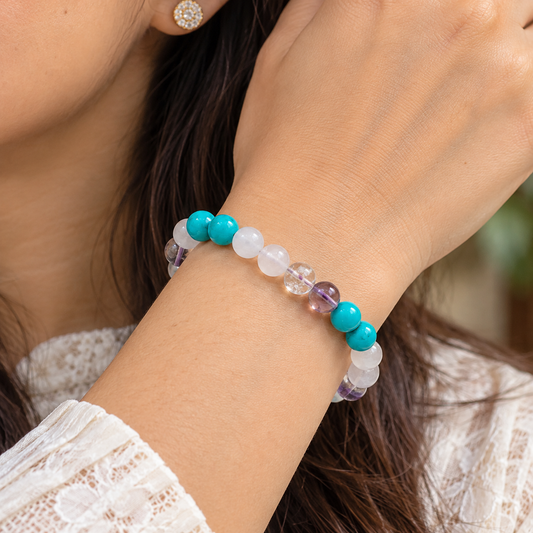
If you're really drawn to wearing Rudraksha, consider pairing it with a Clear Quartz instead of wearing it on its own.
This way, they still receive its quiet, supportive presence - just in a manner suited to their individual birth chart. I want to be clear that this is my own spiritual guidance based on years of astrological observation, not a universal scriptural law that applies to everyone with these placements. If you are unsure where you stand, a proper chart reading is always the most reliable way to know.
4. Which Rudraksha Is Right for You?

Once people accept that they can wear Rudraksha, the very next question is always: "But which one?"
Over the years, I've seen students try to choose their Rudraksha using several different traditional approaches, including:
- Based on life goals - for example, some traditions associate specific Mukhis with focus, confidence, or emotional steadiness
- Based on planetary influence - certain Mukhis are traditionally linked to specific planets in Vedic astrology
- Based on Chandra Rashi (Moon sign) - your Moon sign often shapes emotional temperament, which some traditions use as a starting point for selection
- Based on chakra alignment - certain practitioners select Rudraksha to support specific energy centres
- Based on the spiritual practice itself - a meditator, for instance, may be guided differently than someone focused on grounding or discipline
Each of these is a legitimate lens, rooted in different strands of tradition and that is exactly where the confusion begins.
A person might read one article recommending a 5 Mukhi for their Moon sign, and another recommending a completely different Mukhi based on their career goals. Both can be "correct" within their own framework, but without a clear structure to follow, most beginners end up more confused than when they started.
This is precisely why, after years of fielding these questions individually, I put together the Complete Rudraksha Reference Guide. It brings all of these traditional lenses into one place, so you're not left guessing or piecing together contradictory advice from scattered sources. Inside, you'll find:
- A breakdown of 1–21 Mukhi Rudraksha and their traditional significance
- Planetary associations for each Mukhi
- Chandra Rashi (Moon sign) guidance
- Chakra associations
- Life-goal-based recommendations
- Easy-to-use reference tables you can return to whenever you need clarity
It is priced at ₹699, and I designed it to be a companion you keep coming back to - not a one-time read. My hope is that it gives you the same clarity I try to give my students in person, in a format you can use at your own pace.

5. What Are the Benefits of Wearing Rudraksha?
I want to be very deliberate in how I answer this question, because it is the one most prone to exaggeration online.
Rudraksha is traditionally worn to support:
- Meditation - many practitioners find that holding or wearing Rudraksha helps the mind settle into stillness more easily
- Focus - a steady physical reminder can anchor attention during prayer, study, or mindfulness practice
- Emotional balance - the ritual of wearing something sacred often brings a quiet sense of steadiness through the day
- Spiritual discipline - Rudraksha is frequently used alongside mantra practice (Japa), reinforcing consistency in one's spiritual routine
- Confidence - for many, wearing Rudraksha is a daily reminder of their intention and values, which naturally supports self-assurance
- Inner peace - devotees have used it for generations as part of practices aimed at cultivating calm and contentment
I want to be honest with you: I do not present Rudraksha as something that treats illness or guarantees a specific life outcome. It is a spiritual support system, not a medical device or a good-luck charm. What I have witnessed, in myself and in the students I've guided, is that Rudraksha works best as part of a larger practice - alongside meditation, mantra, and mindful living - rather than as a standalone fix.
6. What Are the Rules for Wearing and Caring for Rudraksha?

Rudraksha doesn't require an elaborate ritual to maintain, but a little consistent care goes a long way. Here is the simple checklist I share with my students:
Cleaning
- Wipe gently with a soft, dry cloth after wearing
- Avoid soaking it in water for long periods, as this can affect the bead over time
- Keep it away from strong soaps, perfumes, or chemical-based products
Storage
- Store in a clean, dry pouch or box when not being worn
- Keep away from direct sunlight for prolonged periods
- Avoid tossing it carelessly with other jewellery, as the surface can get scratched
Respect
- Treat it as a sacred object, not a fashion accessory worn carelessly
- Avoid wearing it into spaces you personally consider impure or disrespectful to your own beliefs
- Handle it, especially energised beads, with clean hands
Daily Care
- Take it off before activities like swimming, heavy manual work, or sleeping if it feels more comfortable to you
- Re-energise it periodically with a short prayer or mantra if that is part of your practice
- Restring it on fresh thread if the existing one becomes worn or frayed
None of this needs to feel like a burden. Think of it the way you'd think of caring for anything meaningful in your life - a little attention, given regularly, is enough.
7. How Can You Identify an Original Rudraksha?
This is where I see the most heartbreak - people who have unknowingly bought synthetic or artificially altered beads believing they were authentic.
A genuine Rudraksha will typically show:
- Natural, irregular grooves (Mukhis) rather than perfectly uniform, machine-like lines
- A slightly rough, organic texture, rather than an artificially smooth or glossy surface
- Natural variation in size and shape - no two genuine beads are perfectly identical
- A source you can trust - reputable sellers who are transparent about origin and sourcing
I want to gently steer you away from some very popular "authenticity tests" that continue to circulate online:
- The floating test (claiming real Rudraksha sinks while fake ones float) - density varies naturally even among genuine beads, so this is not a reliable indicator
- The water test - soaking is more likely to damage a genuine bead than prove anything
- The copper coin test - this folk test has no consistent scientific or traditional basis
The single most reliable way to ensure authenticity is to buy from a trusted, transparent source that can speak knowledgeably about origin, Mukhi count, and sourcing rather than relying on a home test that has been passed around social media for years.
If you are looking for a source you can genuinely trust, I invite you to explore my own collection at shop.drneetikaushik.com. Every Rudraksha we offer is real, authentic, and comes with proper certification so you never have to rely on guesswork or a home test to know what you're wearing.
8. Why Is Nepali Rudraksha Considered More Valuable Than Indonesian Rudraksha?
Both Nepali and Indonesian Rudraksha are genuine, and I want to be very clear about that before going further - one is not "fake" and the other "real." They are simply different in a few noticeable ways.
- Size - Nepali Rudraksha beads are generally larger
- Texture - Nepali beads tend to have a slightly rougher, more pronounced surface, while Indonesian beads are often smaller and smoother
- Traditional preference - Nepali Rudraksha has historically been more prized in North Indian and Himalayan spiritual traditions, partly due to proximity and partly due to long-standing trade history
- Personal choice - many practitioners today choose based on comfort, budget, and how the bead feels to them, rather than strictly following the traditional hierarchy
If your budget and access allow, Nepali Rudraksha is often preferred for its size and traditional standing. But an authentic Indonesian Rudraksha, worn with the same sincerity, holds its own value. The tree, the origin, and your intention matter far more than which side of the Himalayas the seed grew on.
9. What Are the Biggest Mistakes People Make While Buying Rudraksha?
From years of guiding students through this process, here are the mistakes I see most often:
- Buying purely on price - the cheapest option is rarely the most authentic one
- Trusting random social media sellers - a polished Instagram page is not the same as a transparent, trustworthy source
- Ignoring authenticity altogether - getting swept up in a "deal" without asking basic questions about sourcing
- Buying the wrong Mukhi - choosing based on trend rather than personal guidance suited to your chart or intention
- Following unverified myths - like the floating or water tests mentioned earlier
- Not seeking guidance at all - jumping straight to a purchase without understanding what you're buying or why
If I could offer one piece of advice here, it would be this: slow down. Rudraksha is not an impulse purchase. A few extra days spent understanding what you need will serve you far better than a rushed decision you later regret.
10. Can Rudraksha Be Worn with Crystals?
Yes - in many traditions, Rudraksha is worn alongside crystals, and I personally combine both in my own spiritual practice and with many of my students.
Traditionally, Rudraksha and crystals are seen as complementary rather than conflicting. For example:
- Rudraksha paired with Clear Quartz is often used to support clarity and amplify focused intention
- Rudraksha combined with grounding stones can support stability during periods of change
- Rudraksha alongside heart-centred crystals is sometimes used to support emotional balance in daily practice
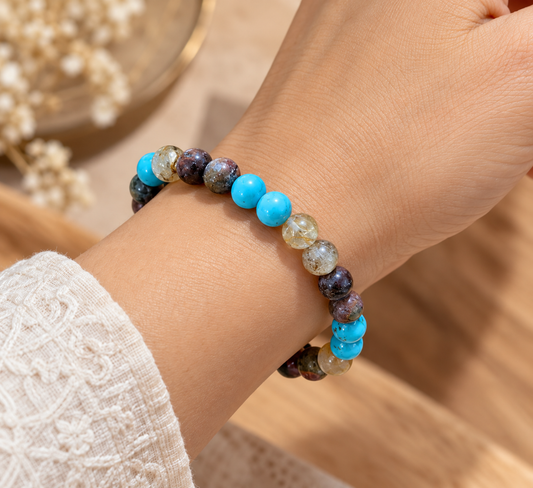
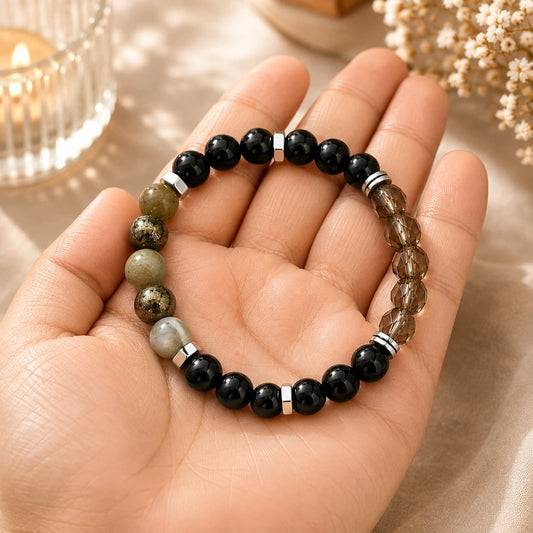
The key is intention. Rather than randomly combining beads, I encourage students to think about what they are trying to support in their life - discipline, calm, focus, healing and choose a thoughtful pairing accordingly. If you're exploring which crystals might complement your Rudraksha practice, I've written extensively about individual crystal properties and combinations on my crystal website, which can help you build a pairing that feels right for you.
11. How Should You Energize (Abhimantrit) a Rudraksha Before Using It?
Energising, or making a Rudraksha "Abhimantrit," is a simple, respectful practice - not an elaborate ceremony.
Here is the basic method I recommend to my students:
- Cleanse the space you'll be sitting in, and cleanse yourself with a few quiet, mindful breaths
- Hold the Rudraksha gently in your right palm, or place it in front of you on a clean cloth
- Chant the traditional beej mantra - most commonly "Om Namah Shivaya" - with sincerity, repeating it a comfortable number of times (108 is traditional, using a mala if you have one)
- Offer a brief prayer of intention, silently or aloud, expressing why you are choosing to wear this Rudraksha
- Wear or store it respectfully once you feel the practice is complete
There is no need to overcomplicate this. What matters most is your sincerity in that moment - not the length or complexity of the ritual.
12. What Should You Do If Your Rudraksha Breaks or Changes Colour?
I want to answer this one calmly, because I know it worries people more than it should.
Rudraksha is a natural seed, and like any natural material, it ages. Over months and years of wear, colour can deepen or shift slightly due to oils from your skin, exposure to air, and general handling. This is completely normal and not a sign of anything negative.
If a bead cracks or breaks, it usually means it has simply reached the natural end of its use - much like any well-worn, natural object. There is no need for fear or superstition here. The respectful next step is simply to:
- Thank it for its service, if that feels meaningful to you
- Return it to the earth respectfully - for example, near a tree, a plant, or a body of clean water - rather than discarding it in the trash
- Replace it with a new one if you'd like to continue your practice
Aging and wear are part of the natural life of the bead. They don't diminish the sincerity of the years you wore it.
13. Where Should You Buy Authentic Rudraksha?
By now, you understand what to look for - natural variation, transparent sourcing, and a seller who can speak knowledgeably rather than just sell enthusiastically. Beyond that, the most important thing is finding a source that prioritises your understanding as much as the sale itself.
Look for sellers who:
- Are transparent about origin (Nepali or Indonesian) and Mukhi count
- Offer some form of guidance rather than just a product listing
- Are willing to answer your questions honestly, including about things a bead cannot do
- Have a track record you can verify, rather than a brand-new page with no history
At shop.drneetikaushik.com, you'll find carefully selected Rudraksha along with educational guidance to help you choose the one that best aligns with your spiritual journey. My aim has never been simply to sell Rudraksha - it is to help you understand and use it with confidence and clarity, the same way I would guide a student sitting across from me.
Final Reflection
Rudraksha is not a shortcut to transformation. It is a sacred companion that can support your spiritual journey when combined with faith, self-discipline, sincere intention, and positive action. Over the years, I have watched students place enormous hope in a single bead, only to feel let down when their lives didn't change overnight. That disappointment usually comes from a misunderstanding - not of Rudraksha itself, but of what it was ever meant to do.
The bead is only one part of the journey. The way you live, learn, and practice each day is what truly gives it meaning. If you approach Rudraksha with respect, patience, and genuine intention, I believe it can become a quiet, steady companion - one that reminds you, again and again, to return to your centre.
Need Help Choosing the Right Rudraksha?
If you're feeling overwhelmed by the different selection methods, my Complete Rudraksha Reference Guide brings together 1–21 Mukhi meanings, planetary associations, Chandra Rashi guidance, chakra associations, life-goal recommendations, and easy-to-use reference tables - all in one place, for ₹699.
Looking for Authentic Rudraksha?
Explore the carefully selected Rudraksha collection at shop.drneetikaushik.com, where every bead comes with the educational guidance to help you choose mindfully - not just another product to add to your cart.
Frequently Asked Questions
Q1. Can I sleep while wearing Rudraksha?
Ans. Yes, many people wear Rudraksha while sleeping without any issue, and there is no scriptural rule against it. That said, some practitioners prefer removing it at night simply for physical comfort or to avoid wear on the thread. Both approaches are acceptable - choose whichever feels right and comfortable for your own routine, and store it respectfully nearby if you take it off.
Q2. Can Rudraksha get wet?
Ans. Rudraksha can tolerate occasional, brief contact with water, such as during bathing, without significant harm. However, prolonged soaking or repeated heavy exposure to water is best avoided, as it can affect the bead's texture and thread over time. If it does get wet, simply pat it dry gently with a soft cloth rather than leaving it damp.
Q3. Can children wear Rudraksha?
Ans. Yes, children can wear Rudraksha, and in many families it is introduced early as part of cultural and spiritual upbringing. It's generally sensible to choose a smaller, comfortable bead and to supervise younger children to ensure the strand is secure and safe. As with adults, sincerity and respect matter more than age.
Q4. Can women wear Rudraksha during all stages of life?
Ans. Yes, women can wear Rudraksha at every stage of life, including during menstruation and pregnancy. There is no scriptural restriction that excludes women from this practice. Some individuals choose to pause wearing it during specific personal circumstances out of their own comfort or family customs, but this is a matter of personal choice, not a universal rule.
Q5. How many Rudrakshas can I wear together?
Ans. There is no strict universal limit, and many practitioners wear a mala of 108 beads, a smaller bracelet, or a single bead comfortably. What matters more than the count is that each bead is worn with clarity of intention rather than collected randomly. If you're combining multiple Mukhis or types, it helps to choose them thoughtfully rather than all at once.
Q.6 Can I gift a Rudraksha to someone?
Ans. Yes, gifting Rudraksha is a common and meaningful practice, especially during Sawan or other auspicious occasions. It is traditionally seen as a gesture of goodwill and spiritual care. If possible, energise it with a simple prayer before gifting, and let the recipient know a little about its significance so they can wear it with understanding.
Q7. Does Rudraksha lose its power over time?
Ans. Rudraksha doesn't have an expiry in the way we might think of a battery running out. With proper care, it can be worn for many years, and its significance to you often deepens with time rather than fading. Natural changes in colour or texture are part of its aging process, not a sign that it has stopped "working."
Q8. Can I wear Rudraksha with a watch or other jewellery?
Ans. Yes, Rudraksha can generally be worn alongside a watch, rings, or other jewellery without conflict. Some practitioners simply prefer to keep a Rudraksha mala or bracelet separate from metal jewellery to avoid scratching the beads, which is a practical consideration rather than a spiritual restriction.
References
Scriptural and Traditional Sources
- Shiva Purana - origin narrative of Rudraksha from Lord Shiva's tears; Mukhi associations
- Devi Bhagavata Purana - preparation and significance of Rudraksha garlands
- Padma Purana - devotional references to Rudraksha
- Jabala Upanishad - among the earliest texts formally recommending the wearing of Rudraksha
Botanical Reference
- Elaeocarpus ganitrus (family Elaeocarpaceae) - the tree from which Rudraksha seeds are botanically sourced, native to the Himalayan foothills, Nepal, and parts of South and Southeast Asia
Note: Traditional and scriptural references above reflect centuries of devotional literature and should be understood as spiritual and cultural heritage. They are presented separately from Dr. Neeti Kaushik's personal astrological and spiritual guidance, which is based on her own experience and study.